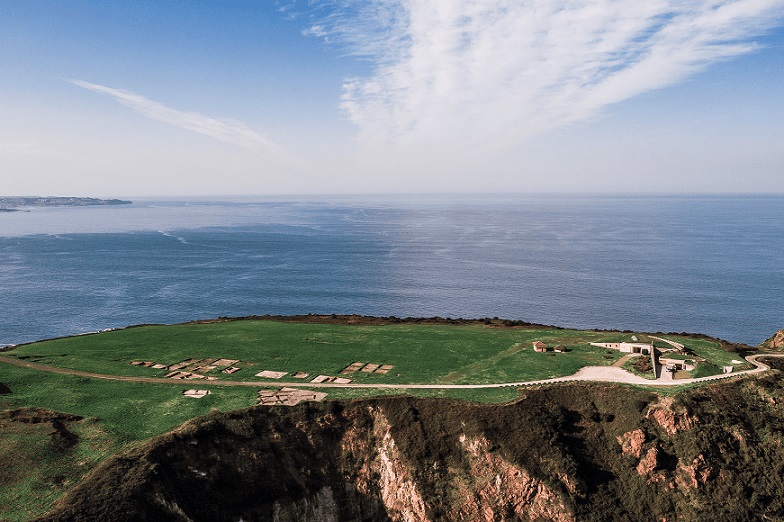

On Cape Torres, seven kilometres from the centre of Gijón/Xixón, and on the western flank of its bay, is the Campa Torres Archaeological-Natural Park.
Inaugurated in 1995, it is part of the archaeological museums of Gijón/Xixón, along with the Roman Baths of Campo Valdés and the Roman Villa of Veranes, all of them dependent on the City Council of Gijón.
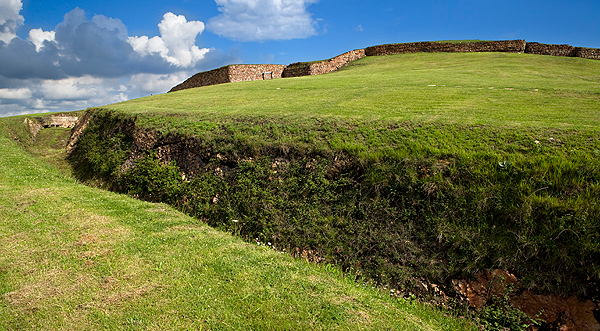
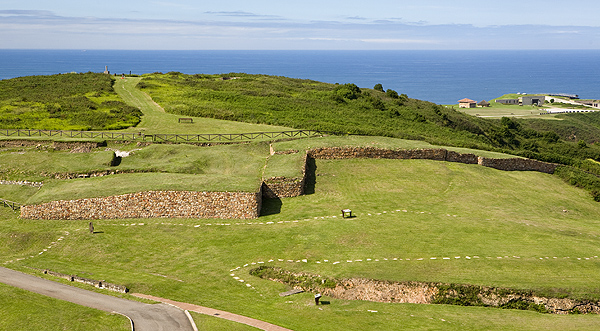
It is the largest maritime fortified enclosure on the entire coast of the Astures. Its origin, according to its researchers, dates back to the 6th-5th centuries BC and was occupied by people mainly dedicated to metallurgy (cilúrnigos). Later, in the 1st century AD it was Romanised and known by classical sources as oppidum Noega. With the foundation of the Roman city of Gijón, at the beginning of the 2nd century AD, in the current neighbourhood of Cimavilla, the fort was gradually depopulated until it disappeared.
Its objectives are the protection, conservation, research and scientific and didactic dissemination of the archaeological remains rescued in the excavations, seeking balance with the natural environment in which they are located. From an archaeological point of view, the park provides information on Asturian protohistory and explains the origins of the city of Gijón. It allows us to learn about the passage from the pre-Roman to the Roman era.
The visit
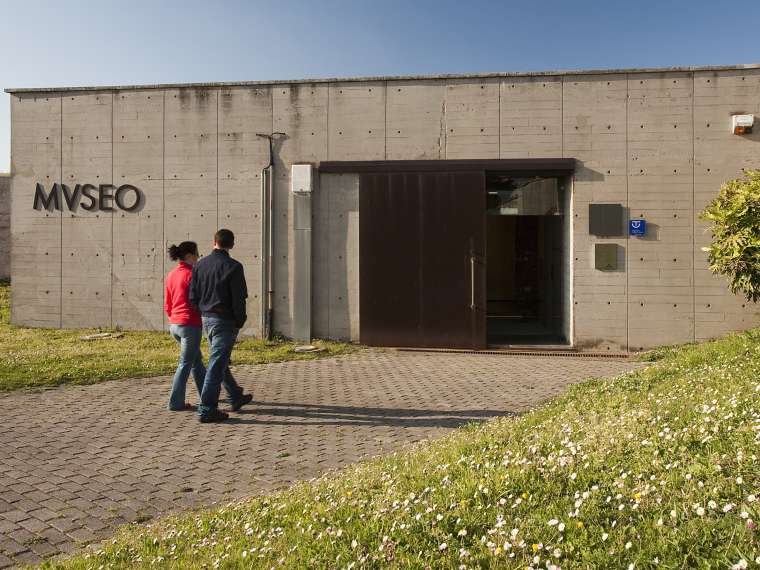
The Park’s facilities are made up of three main buildings: reception, museum and lighthouse. The first is located at the entrance to the site and serves to welcome visitors as well as presenting an exhibition on the archaeology of the council. The museum, at the northern end of the fort, partly takes advantage of an old coastal artillery site. It has a permanent exhibition, temporary exhibition room, workshops and assembly hall. The permanent exhibition takes a tour of the history of the town from its origins to Roman times. Material remains from the excavations are shown as well as models, texts, reproductions and illustrative images.
The tour ends at the Cabo Torres Lighthouse, built in 1923. On the ground floor there is a permanent exhibition on the history of this port building, Cape Torres and its anchorage. On the upper floor is the “Manuel Fernández-Miranda” Library and Documentation Centre, as well as the administrative office of the Archaeology area of the Gijón City Council, from where the archaeological activity of the council is coordinated.
In addition, the Park has an archaeological itinerary, a bird observatory and a viewpoint with extensive views over the port of El Musel and Gijón. The archaeological itinerary runs through thirteen observation points where the most significant elements of the settlement are identified (moat, counter-moat, wall and houses). Brochure for the visit.
The collection
It is made up of a selection of the movable remains located at the castro site, as well as from other sites in the municipality of Gijón such as the tumular necropolis of Monte Deva, the Roman wall of Cimavilla, the castle of Curiel (Peñaferruz) and the Roman villa of Veranes. Some of these pieces can be consulted through the CER.ES platform (Network Collections) of the Ministry of Culture.
Activities and services
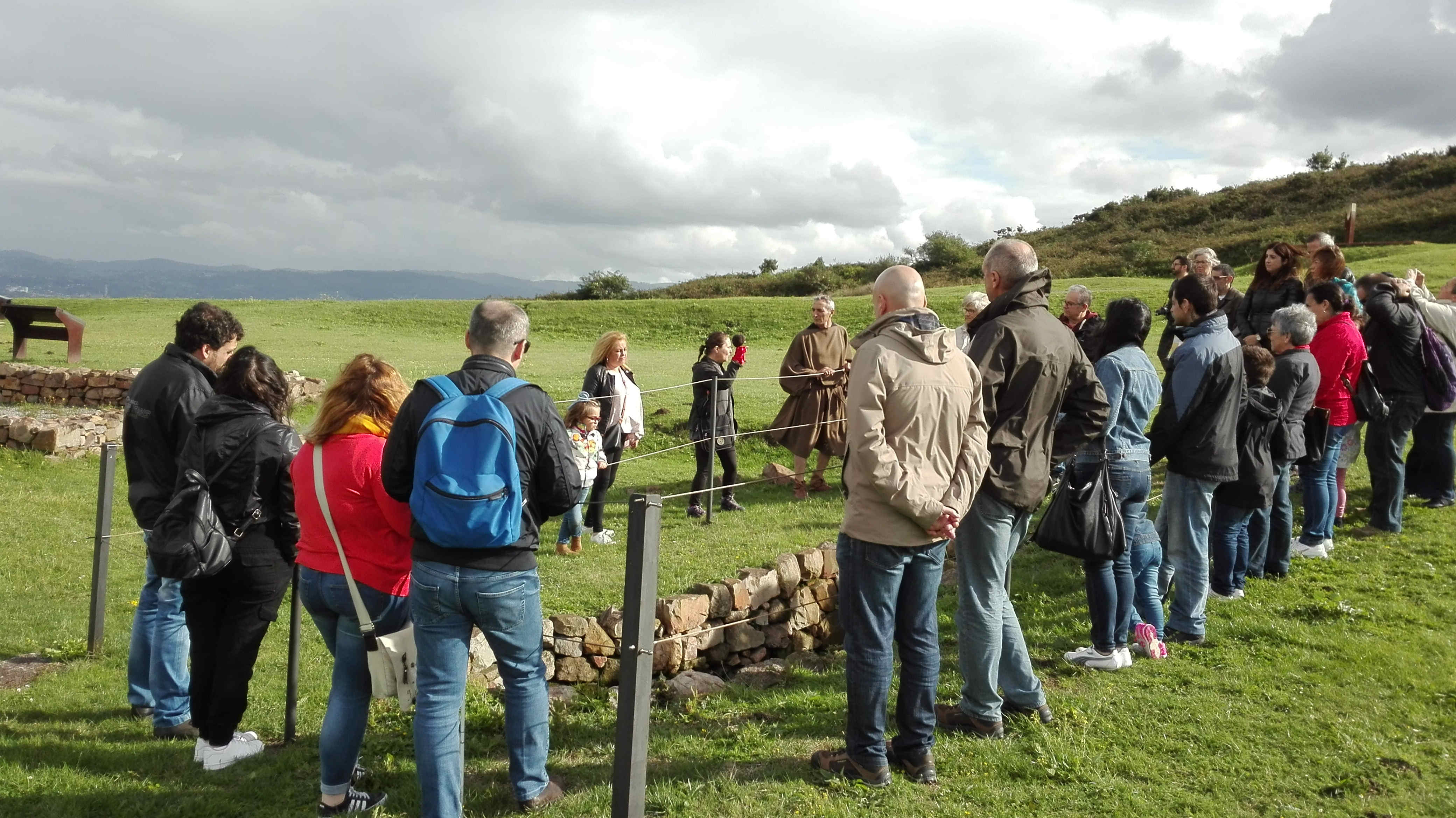
The Park is a place of recreation and culture in which various activities are carried out linked to the knowledge and enjoyment of the archaeological heritage of Cape Torres. These initiatives aim to draw attention and motivate the public about the value and need to protect archaeological heritage. Thus, an extensive programme of activities and services is developed aimed at all audiences that include visits and guided itineraries, school programmes, conferences, historical reenactment days, photography competitions, theatre shows, etc.
Access allowed to pets, on a leash, in outdoor areas.
OUR IDENTITY
CAMPAIGNS
DISCOVER
HIGHLIGHTS
FEATURED
Error 500 (Server Error)!!1500.That’s an error.There was an error. Please try again later.That’s all we know.
Error 500 (Server Error)!!1500.That’s an error.There was an error. Please try again later.That’s all we know.
Error 500 (Server Error)!!1500.That’s an error.There was an error. Please try again later.That’s all we know.
Error 500 (Server Error)!!1500.That’s an error.There was an error. Please try again later.That’s all we know.
Error 500 (Server Error)!!1500.That’s an error.There was an error. Please try again later.That’s all we know.
Error 500 (Server Error)!!1500.That’s an error.There was an error. Please try again later.That’s all we know.
Error 500 (Server Error)!!1500.That’s an error.There was an error. Please try again later.That’s all we know.
Error 500 (Server Error)!!1500.That’s an error.There was an error. Please try again later.That’s all we know.
Error 500 (Server Error)!!1500.That’s an error.There was an error. Please try again later.That’s all we know.
Error 500 (Server Error)!!1500.That’s an error.There was an error. Please try again later.That’s all we know.
BUSINESS INTELLIGENCE
Error 500 (Server Error)!!1500.That’s an error.There was an error. Please try again later.That’s all we know.
Error 500 (Server Error)!!1500.That’s an error.There was an error. Please try again later.That’s all we know.
Error 500 (Server Error)!!1500.That’s an error.There was an error. Please try again later.That’s all we know.
Error 500 (Server Error)!!1500.That’s an error.There was an error. Please try again later.That’s all we know.
Error 500 (Server Error)!!1500.That’s an error.There was an error. Please try again later.That’s all we know.
Error 500 (Server Error)!!1500.That’s an error.There was an error. Please try again later.That’s all we know.
Error 500 (Server Error)!!1500.That’s an error.There was an error. Please try again later.That’s all we know.
Error 500 (Server Error)!!1500.That’s an error.There was an error. Please try again later.That’s all we know.
Error 500 (Server Error)!!1500.That’s an error.There was an error. Please try again later.That’s all we know.
Error 500 (Server Error)!!1500.That’s an error.There was an error. Please try again later.That’s all we know.