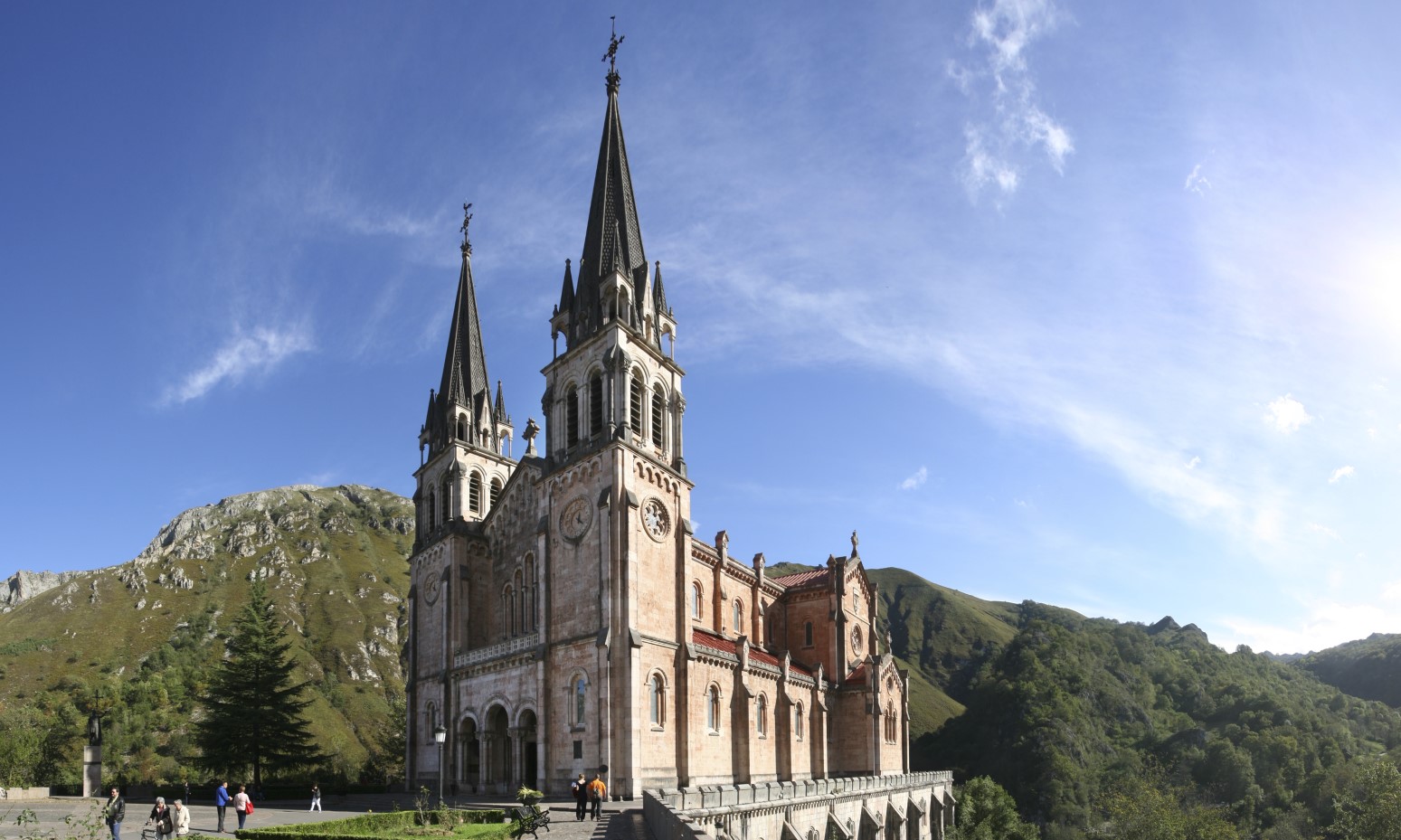

Legend has it that in the Holy Cave, the Virgin of Covadonga appeared to King Pelayo in the year 722 and gave him a Cross with which he defeated the Muslims in the battle of Covadonga. This Cross was called the Cross of Victory and is today the symbol of Asturias. Over the centuries, a pilgrimage route has been created to this sanctuary, a route that starts from Gijón/Xixón and that, in its first stage, reaches the nucleus of Amandi, already in the neighboring municipality of Villaviciosa.

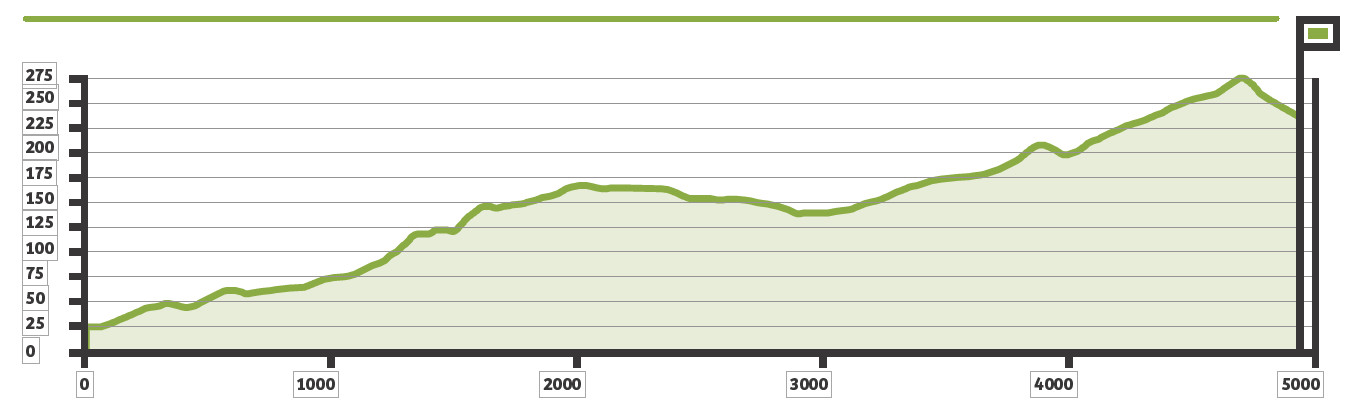
Walked: 1 hour 45 minutes (1st stage)
By bike: 40 minutes

Type of pavement: gravel and asphalt

Elevation gain: 219 metres.
Cumulative elevation gain: 271 metres.
In 1858, Queen Isabel II made a pilgrimage, with her entire entourage, to Covadonga to pray to the Santina. For this reason, this path is also called “Camín de la Reina”. However, the beginning of the pilgrimages to Covadonga is lost in the mists of time. Some authors claim that the first documented pilgrimage is that of the King of Asturias Alfonso III the Great, back in the ninth century. In any case, this king’s trip to Covadonga is unthinkable without the existence in the place of an ancient veneration, even before the arrival of Christianity. To this day, there have been many people who, out of devotion or promise, have made this route on foot. It was customary that, in some situation of trouble, illness or need, people would accept the promise of going to Covadonga on foot, to thank the Santina for some gift received or to entrust themselves so that a wish would come true.
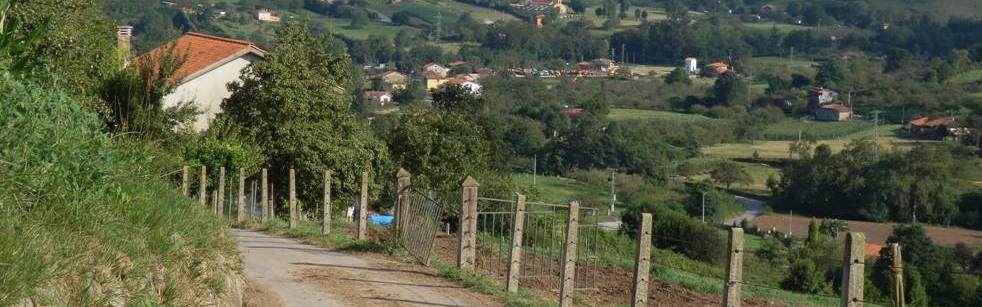
In Gijón/Xixón, the Camín a Covadonga starts from the parish of Deva. Here, the relationship between the Peñafrancia river and the river that rises in Covadonga, also called Deva, and between the Marian Sanctuary of the Virgin of Peñafrancia and that of the Santina de Covadonga, is striking. Both are located in sacred places that were already venerated before the arrival of Christianity and in which there was devotion to that Deva or goddess of Nature. The path starts at the “Güeyu Deva” next to the washhouse and the parish church and, crossing the Pedroco neighborhood, goes up a track in the direction of Faro, where the Cabeza Castreña de Deva is located. The path continues from Faro, climbing gently, to the Olla. Another alternative route leaves from Camping Deva and joins the path at La Olla, where you can take a look at Gijón/Xixón, seen here as if from a map.
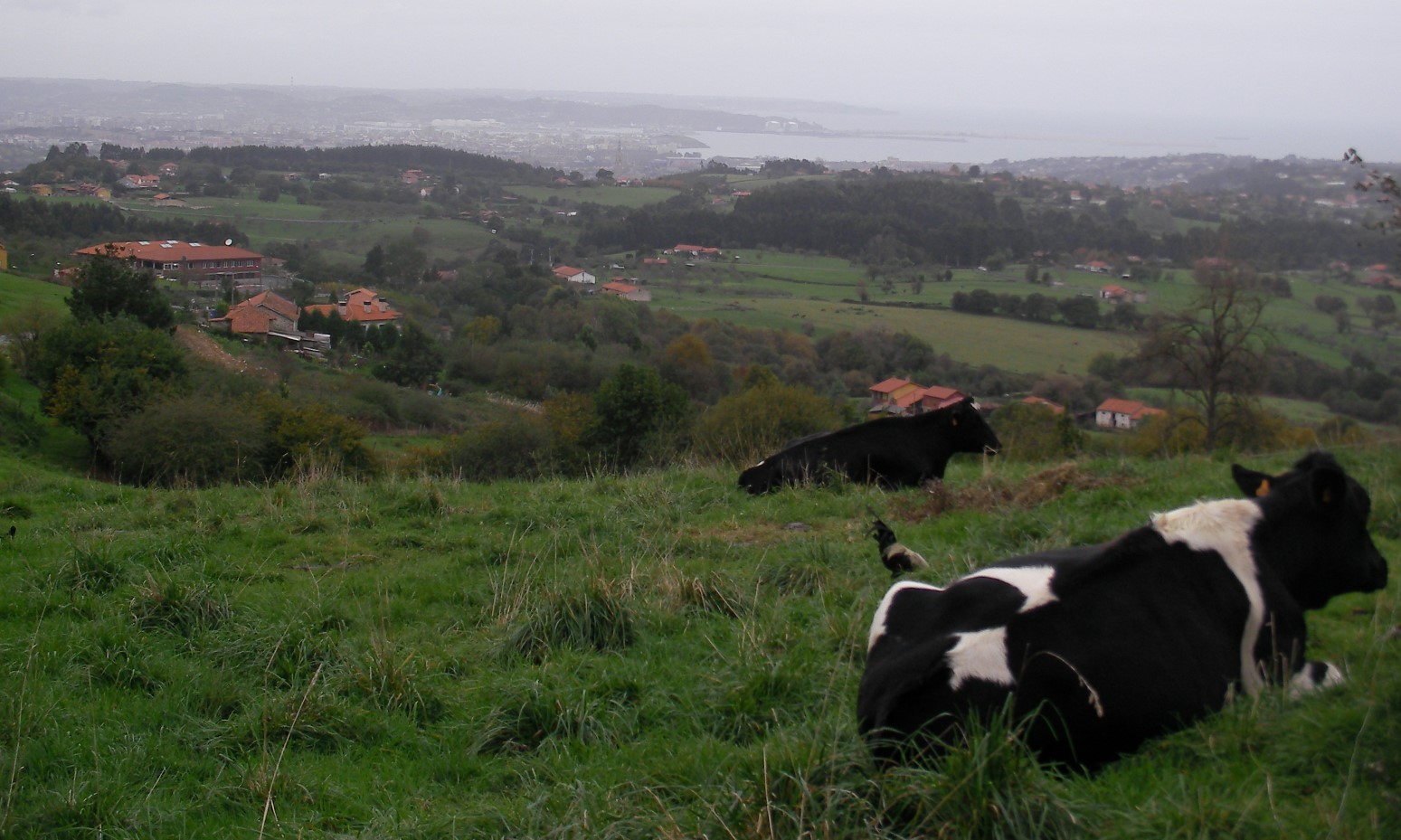
We cross the Peón road and take a small path next to another farmhouse, between trees and meadows, which takes us along a track to Castañera, where, after passing by villas and houses in the Mariñanas, we enter the council of Villaviciosa. A little further on, following the road, you reach the Altu’l Curbiellu, where you can see a wide panoramic view of Gijón/Xixón, Peñes and les Mariñes, Quintes and Quintueles, where we can regain strength before continuing the path that will take us to Amandi, in the first stage, to Llames de Parres, in the second, and finally, to Covadonga, entering the Royal Site through the El Repelao field that takes us to the foot of the Holy Cave, with a visit to the Santina and the monumental and historical complex of Covadonga.